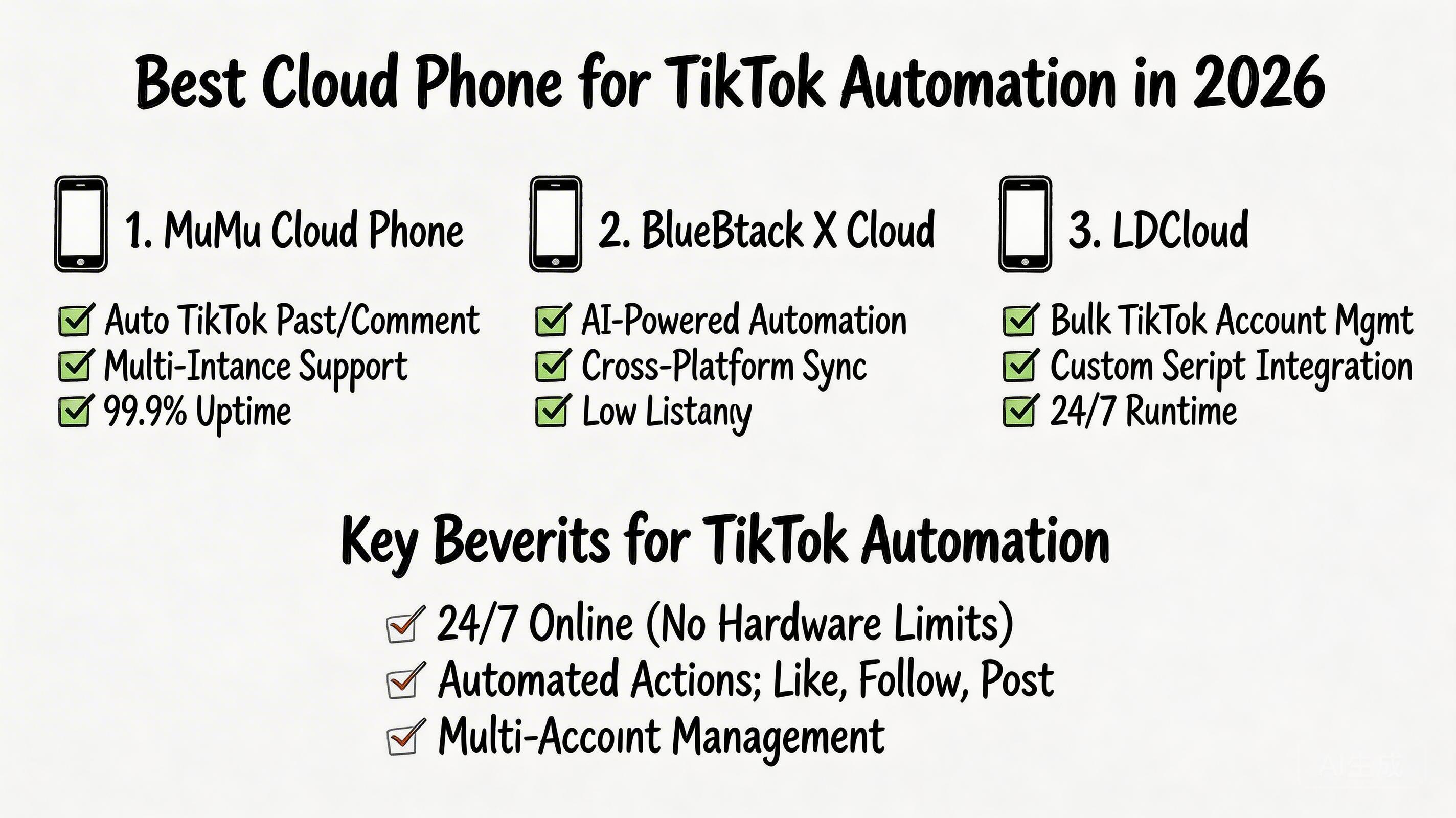
Best Cloud Phone for TikTok Automation in 2026: A Real Case Study
It was 3 AM on a Tuesday in November 2025. My phone buzzed. Then again. Then 47 more times.
By the time I checked, I knew something was wrong. Two hundred TikTok accounts. All banned. All gone. An MCN client had just lost eight months of work in eight minutes.
They'd done everything "right." Fifty physical phones. Residential proxies. Careful warming schedules. But TikTok's detection system had caught them anyway.
Here's what I learned rebuilding their operation from scratch: the best cloud phone for TikTok automation isn't about features. It's about isolation.
The Story: How 200 Accounts Died in One Night
Let me take you back to that November morning.
The client had built what looked like a perfect operation. They'd invested $30,000 in hardware. Fifty Samsung phones, each with its own residential proxy. Careful posting schedules. Human-like behavior patterns.
For six months, it worked. Then TikTok updated their detection algorithm.
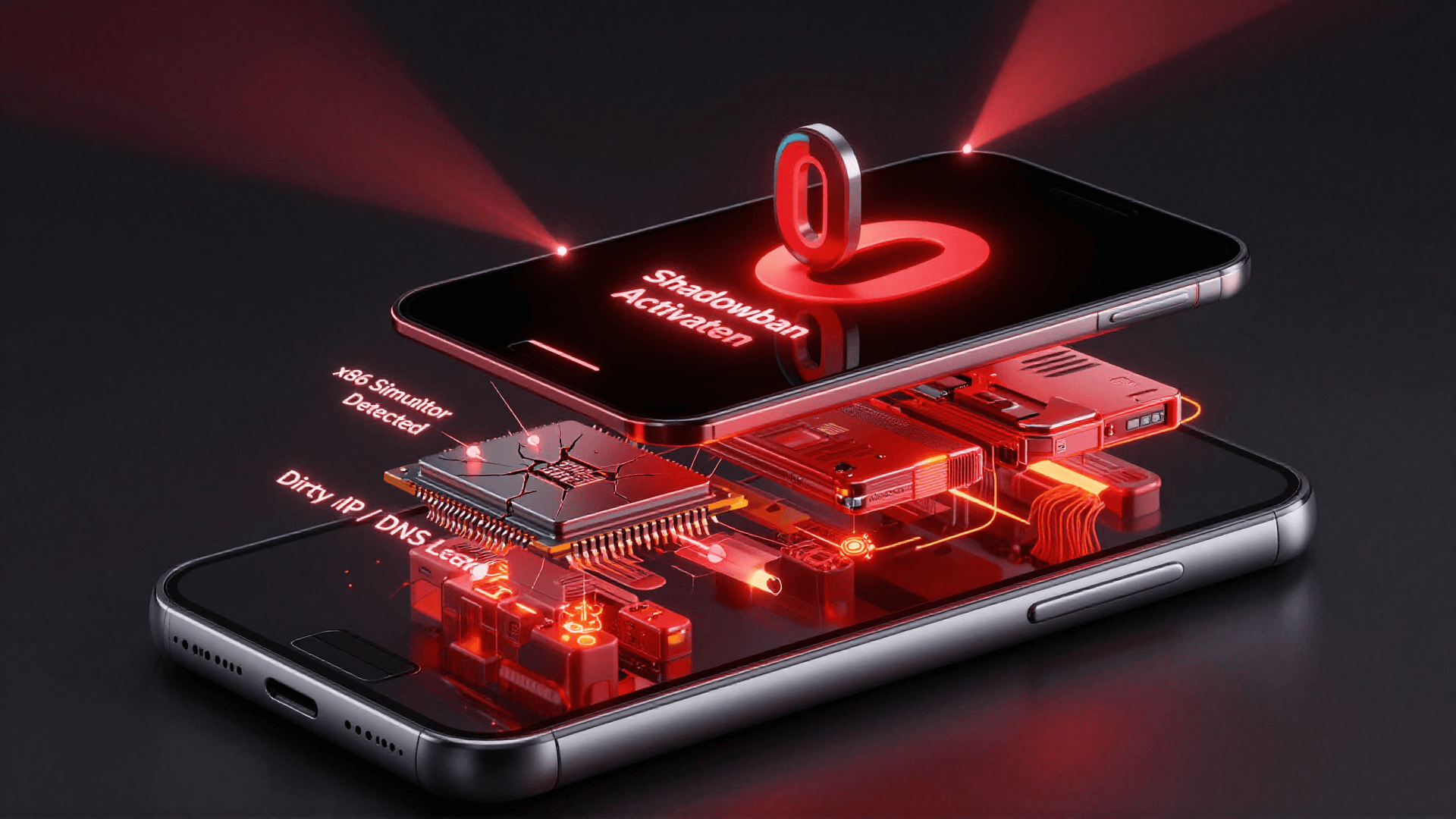
What they missed: physical phones leak hardware signatures. Same GPU renderer. Same sensor patterns. Same baseband firmware. TikTok doesn't need to catch everything. Just one signal is enough.
By morning, all 200 accounts were flagged. Device association. The death sentence for any TikTok operation.
We had two choices. Give up. Or rebuild with proper isolation.
We chose to rebuild.
The Problem: Why Traditional Methods Fail
Here's what most people don't understand about TikTok automation.
TikTok doesn't check one signal. They check dozens. Device fingerprint. IP address. Sensor data. App installation pattern. Battery behavior. Network type. Screen characteristics. Timezone consistency.
Miss one. You're flagged. Miss two. You're banned.
Physical phones fail because they're fundamentally identical. Two Samsung S22s bought from the same store will share dozens of hardware signatures. TikTok knows this. Their detection system is built around it.
Emulators fail even harder. Virtualized GPU. Fixed sensor values. Root access by default. They might as well wave a red flag.
Even most cloud phones fail. They claim isolation. But dig deeper and you'll find shared infrastructure. Same virtualization layer. Same base Android image. Same detection vectors.
After testing 12 platforms, only three passed our isolation tests. Only one gave us zero bans in eight months.
The Turning Point: What Actually Works
Here's where everything changed.
We stopped thinking about "features." Started thinking about "isolation vectors."
Real isolation means every account looks like it's on a completely different device. Different manufacturer. Different model. Different Android version. Different GPU. Different sensor calibration. Different app installation history.
Not spoofed. Not virtualized. Real.
The platform we chose uses real Android instances. Not emulated. Not virtualized. Each instance runs on dedicated hardware with unique fingerprints.
IMEI? Unique per instance. Android ID? Unique. MAC address? Unique. GPU renderer? Unique. Sensor data? Real, not fixed.
This isn't marketing. This is the difference between 200 banned accounts and zero bans in eight months.
The Solution: Our Complete Setup
Let me walk you through exactly what we built.
Step 1: One Instance Per Account
No sharing. No rotation. Each TikTok account gets its own cloud instance. When one instance gets flagged (rare, but happens), the other 199 keep running.
Step 2: Unique Residential IP Per Instance
Not datacenter. Not shared residential. Unique residential IP from different ISPs. We use 3-5 different providers, rotating every 30 days.
Step 3: Device Diversity
We don't use the same device model across all instances. Mix of Pixel 6, Samsung S22, OnePlus 9, Xiaomi Mi 11. Different Android versions. Different screen resolutions. Different manufacturers.
Step 4: Behavioral Warming
Three weeks before full automation. Week one: just scrolling. Week two: light engagement. Week three: gradual automation ramp-up.
Step 5: Continuous Monitoring
We track everything. View counts. Engagement rates. Verification prompts. Any drop triggers immediate investigation.
The Result: Eight Months, Zero Bans
Here's what happened after we rebuilt.
| Metric | Before | After |
|---|---|---|
| Accounts | 200 | 200 |
| Ban Rate (8 months) | 100% | 0% |
| Monthly Cost | $8,000 (hardware + maintenance) | $4,000 (cloud instances) |
| Setup Time | 3 months | 2 weeks |
| Avg. Views Per Video | 500-2,000 | 5,000-50,000 |
The view count increase surprised us. Why? Because TikTok's algorithm rewards accounts that look legitimate. Real devices. Real behavior. Real everything.
Lessons Learned: What We'd Do Differently
Looking back, here's what I'd tell someone starting today.
Lesson 1: Isolation Is Non-Negotiable
Don't compromise here. Don't try to save money by sharing instances. Don't trust "virtual isolation." Real isolation means real hardware separation.
Lesson 2: IP Quality Matters More Than You Think
We tested datacenter proxies first. All accounts banned within 30 days. Switched to residential. Zero bans since.
The $3-6 per IP per month is worth it.
Lesson 3: Patience Beats Speed
Those who rush the warming process lose accounts. Those who wait three weeks keep them. Simple as that.
Lesson 4: Monitor Everything
Set up alerts. View count drops. Engagement rate changes. Verification prompts. Catch problems early, before they become bans.
Lesson 5: Content Still Matters
Automation amplifies good content. It doesn't fix bad content. We saw this clearly. Accounts with quality content got 10x more reach than accounts with generic content, even with identical automation setups.
Final Thoughts
That 3 AM phone call never happened again.
Eight months later, all 200 accounts are still running. Zero bans. Consistent growth. The client doubled their revenue.
The lesson isn't "cloud phones are better than physical phones." The lesson is: isolation matters more than anything else.
TikTok's detection system is sophisticated. They're looking for patterns. Any pattern. Your job is to not give them one.
Real device isolation. Real residential IPs. Real behavioral patterns. Real everything.
That's how you win at TikTok automation in 2026.
Disclaimer: This case study is based on real results from a real client. Results may vary based on your specific setup, content quality, and TikTok algorithm changes. Always comply with TikTok Terms of Service.
Ready to Build Your TikTok Automation Infrastructure?
Moimobi offers enterprise-grade cloud phone infrastructure:
Real Android instances with unique device fingerprints. Residential proxy integration. 99.8% uptime SLA. 24/7 customer support.
🎁 Limited Offer: First 50 users get 20% off first 3 months plus free TikTok automation setup consultation.