

If you have been following the autonomous AI agent space in early 2026, you've undoubtedly heard the hype surrounding OpenClaw. Skyrocketing past some of the most popular repositories on GitHub, Peter Steinberger’s creation has promised to revolutionize how we interact with digital assistants.
But in a world where AutoGPT has reigned supreme as the pioneer of autonomous agents since 2023, a critical question arises: Is OpenClaw actually a significant leap forward, or is it just the newest flavor of the month with better marketing?
In this comprehensive, deep-dive OpenClaw review, we will put it head-to-head against AutoGPT. We’ll explore their architectures, usability, real-world task completion rates, security vulnerabilities (yes, we will talk about the OpenClaw privacy nightmare), and ultimately help you decide which agent belongs on your local server.
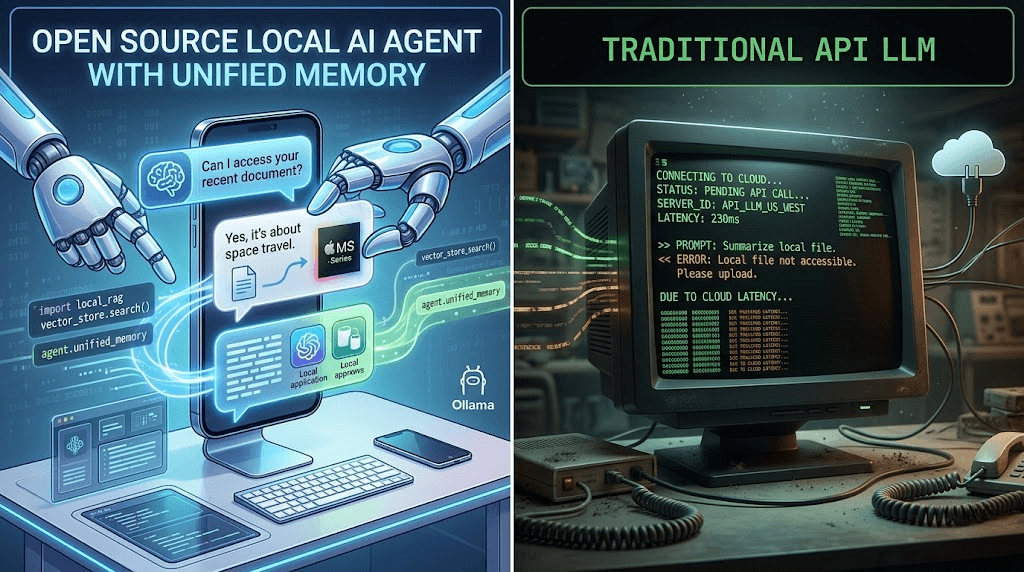
1. What is OpenClaw? The Next-Gen Autonomous Agent
Originally known by temporary monikers like Clawdbot and Moltbot, OpenClaw is an open-source, locally deployable autonomous AI agent. Unlike traditional chatbots that wait for your prompt in a web browser, OpenClaw operates as a persistent, background "digital employee."
Key Differentiators of OpenClaw:
- Proactive Automation: OpenClaw utilizes a "heartbeat" mechanism (running cron jobs) to monitor systems, check emails, or scrape data without being explicitly prompted every time.
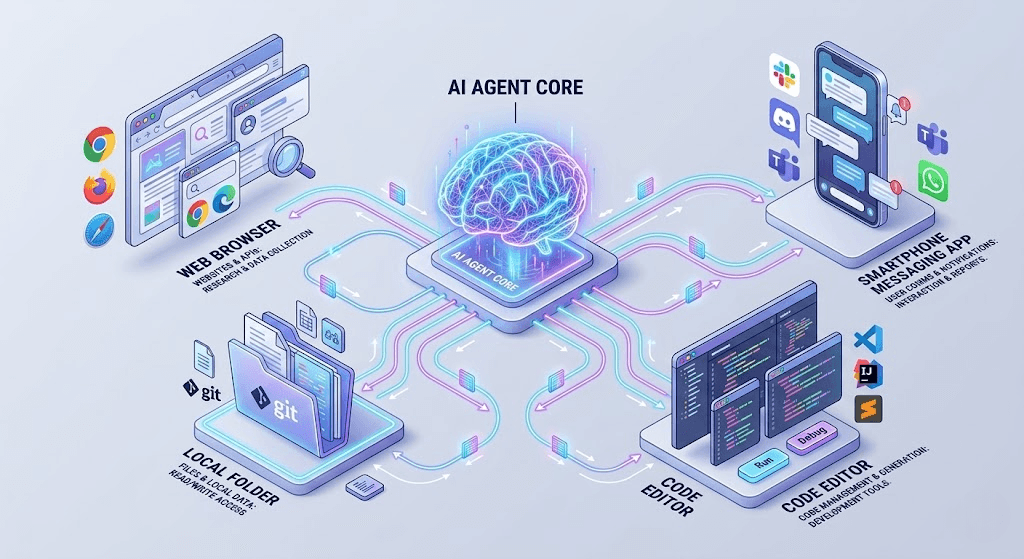
- Messaging App Integration: You don't use a terminal to talk to OpenClaw. It natively hooks into WhatsApp, Telegram, Slack, and Discord. You assign tasks to it as if you were texting a human assistant.
- Deep System Access via ClawHub: Through its robust Skills/MCP (Model Context Protocol) plugins, it can interact with your local file system, run terminal commands, and control web browsers.
2. What is AutoGPT? The Pioneer of the Agentic Web
Launched in early 2023, AutoGPT was the first viral demonstration of an LLM chained to itself to achieve complex, multi-step goals. Driven by OpenAI's GPT models, AutoGPT popularized the concept of "give it a goal, and watch it work."
Core Strengths of AutoGPT:
- Goal-Oriented Prompting: You define a role (e.g., "Market Researcher") and up to 5 goals, and AutoGPT generates its own thoughts, reasoning, and execution plans.
- Massive Community & Legacy: Being the pioneer, it has a massive repository of community-driven resources, plugins, and troubleshooting guides.
- Terminal-First Approach: Built primarily for developers who are comfortable living in the command line interface (CLI).
3. Head-to-Head Comparison: OpenClaw vs. AutoGPT
A. User Interface & Accessibility
AutoGPT is notoriously intimidating for non-developers. You interact with it via a terminal window, constantly approving commands (pressing "y" for yes) as it spews out lines of JSON. While UI wrappers (like AutoGPT-UI) exist, they often feel bolted-on.
OpenClaw wins here by a landslide. By moving the interface to Telegram or WhatsApp, it turns complex agentic workflows into a natural conversation. You can text OpenClaw from your phone while on a train: "Check my server logs for errors and summarize them," and it will text you back an hour later with the results. It democratizes autonomous agents for non-technical managers.
B. Task Execution & The "Infinite Loop" Problem
The biggest flaw of AutoGPT has always been the "infinite loop." It frequently gets stuck trying to execute a web search, failing to parse the DOM, and trying the exact same search again until your OpenAI API budget is drained.
OpenClaw handles errors much more intelligently. Built natively with modern LLMs (supporting Claude 3.5 Sonnet, GPT-4o, and local models via Ollama), its planning architecture includes an "abort and reassess" threshold. If a web scraper fails twice, OpenClaw will automatically search ClawHub for an alternative scraping plugin or ask you for human intervention via Telegram.
C. Extensibility & Plugins
AutoGPT plugins require manual installation via Python dependency management. It works, but it can be clunky.
OpenClaw introduced ClawHub, a decentralized marketplace for "Skills." Installing a skill is as easy as sending a message to your bot: "Install the Google Analytics parsing skill." It instantly gains new capabilities. However, this ease of use brings us to the biggest elephant in the room.
D. Security, Sandboxing, and Privacy Nightmares
This is where AutoGPT takes the lead. Because AutoGPT runs heavily inside Docker containers by default, if the AI goes rogue and tries to run rm -rf / (delete all files), it only destroys its own isolated container.
4. Feature Comparison Table
Here is a quick breakdown of how the two powerhouses compare on key metrics:
5. Pricing and Cost of Running
Both frameworks are open-source and free to download. However, you pay for the "brain" (the LLM API).
Because AutoGPT relies heavily on constant reasoning loops, it can burn through OpenAI API credits incredibly fast (sometimes $5 to $10 an hour if left unchecked). OpenClaw is generally more token-efficient due to its caching system. Moreover, OpenClaw was built with local models in mind from day one; hooking it up to a local Llama-3 model via Ollama means you can run your agent 24/7 for exactly $0.00 (just the cost of your electricity).
6. Final Verdict: Which One Should You Choose?
If you are nostalgic for the terminal and want a strict, goal-based engine heavily isolated in Docker for coding tasks, AutoGPT is still a highly reliable, battle-tested choice.
However, if you want the future of AI—an actual digital assistant that texts you updates, monitors your life in the background, and feels like a real entity—OpenClaw is vastly superior. It has taken the agentic concept out of the developer's terminal and put it directly into our daily communication channels. Just make sure you understand the security implications and lock down your server permissions before installing plugins from ClawHub.
Frequently Asked Questions (FAQ)
Is OpenClaw safe to use?
OpenClaw is powerful but carries security risks if not configured properly. Because it can read local files and execute commands, a malicious plugin or exposed port can compromise your system. It is highly recommended to run OpenClaw within a Docker container or a dedicated virtual machine (VM) and carefully vet any plugins downloaded from ClawHub.
Can OpenClaw run entirely locally without internet?
Yes. While its default configuration might connect to Anthropic or OpenAI APIs, OpenClaw has native support for local inference engines like Ollama. If you download an open-source model (like Llama-3 or Mistral), you can disconnect from the internet and run OpenClaw entirely locally, ensuring 100% data privacy.
Why did Moltbot change its name to OpenClaw?
The project originally started as Clawdbot, paying homage to Anthropic's Claude. Due to trademark concerns, it transitioned to Moltbot. However, the community felt the name lacked impact, leading the creator, Peter Steinberger, to rebrand the framework definitively as OpenClaw to emphasize its open-source nature and robust capabilities.
Does OpenClaw cost money?
The OpenClaw software itself is 100% free and open-source. Your only costs will be the API usage if you choose to connect it to commercial LLMs like GPT-4o or Claude 3.5 Sonnet. If you use local models, it is completely free to operate.