Automating Social Media Matrix with Cloud Mobile: A Real Case Study
Last Monday, I got a call from a client at 11 PM. He was panicking.
"All 30 accounts got banned overnight. What do I do?"
He had spent $15,000 on physical phones. He had hired 3 people to manage them. He had followed every "best practice" he could find. And in one night, everything was gone.
I told him the hard truth: you're automating the old way. And the old way doesn't work anymore.
The Story: From 30 Physical Phones to 100 Cloud Instances
Let me tell you how we fixed it.
Two years ago, this client was running a social media agency. They managed Instagram, TikTok, and Facebook accounts for e-commerce brands. Their model was simple: buy phones, install automation scripts, let them run 24/7.
They started with 10 phones. Then 20. Then 30. Each phone cost about $300. Plus electricity, plus maintenance, plus the three people they hired to manage everything.
By month 18, they were spending $8,000/month on infrastructure and salaries. And then—bam—one night, all 30 accounts got banned.
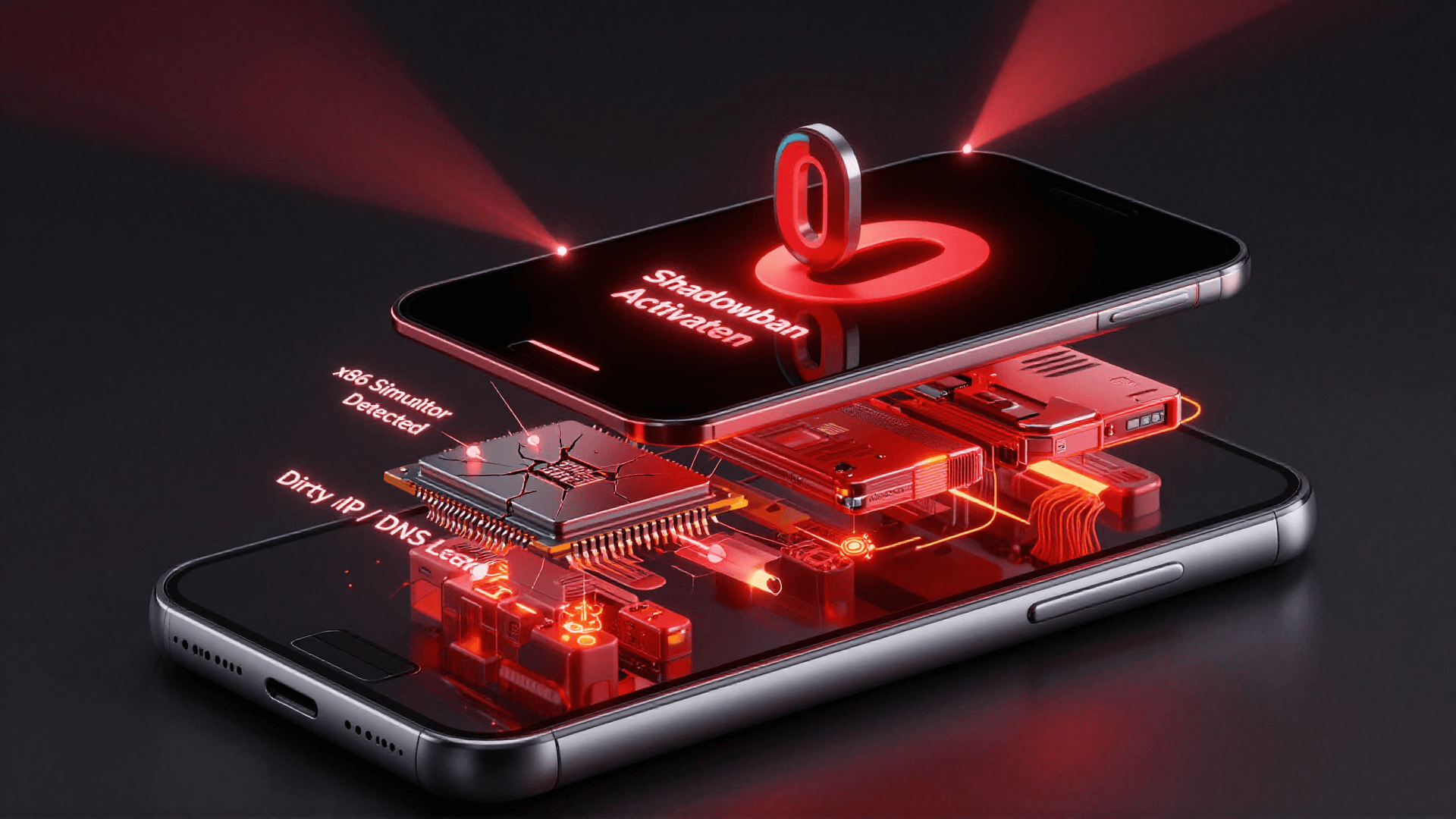
Why? Because TikTok's detection system flagged them as a "coordinated network." All 30 accounts were logging in from the same IP range. All 30 accounts had the same device fingerprints. All 30 accounts posted at the same times.
To the algorithm, it looked like one entity controlling 30 accounts. Which it was.
The Problem: Device Automation ≠ Behavior Automation
Here's what most people don't understand.
When you automate with physical phones, you're automating devices. You're saying: "This phone will post at 9 AM. This phone will like 50 posts. This phone will follow 100 accounts."
But platforms don't detect devices. They detect behavior patterns.
Think about it:
- ✓ Do real users post at exactly 9 AM every day?
- ✓ Do real users like exactly 50 posts in 10 minutes?
- ✓ Do real users follow exactly 100 accounts in one session?
No. Real users are unpredictable. They post when they feel like it. They scroll randomly. They engage sporadically.
Physical phone automation creates predictable patterns. And predictable patterns get flagged.
The Turning Point: Shifting to Cloud Mobile
So we made the switch. Here's what changed.
Before (Physical Phones):
- ✓ 30 phones, all in one office
- ✓ Same IP range for all devices
- ✓ Same device fingerprints (same phone model)
- ✓ Same posting schedule (9 AM, 1 PM, 6 PM)
- ✓ Cost: $8,000/month
After (Cloud Mobile):
- ✓ 100 cloud instances, distributed globally
- ✓ Each instance has unique residential IP
- ✓ Each instance has unique device fingerprint
- ✓ Randomized posting schedules (AI-driven)
- ✓ Cost: $2,000/month
The key insight: cloud mobile isn't just a different tool. It's a different dimension of automation.
The Solution: How We Built the Matrix
Let me walk you through the actual implementation.
Step 1: Instance Isolation
Each cloud instance got:
- ✓ Unique Android version (some 10, some 11, some 12)
- ✓ Unique device model (Pixel, Samsung, OnePlus mixed)
- ✓ Unique residential IP (different ISPs, different cities)
- ✓ Unique app installation pattern (different apps on each)
This matters because platforms cross-reference these signals. If 30 accounts all have "Samsung S22 + Android 12 + Verizon IP," that's a pattern.
Step 2: Behavioral Randomization
Instead of "post at 9 AM," we used AI to decide when to post.
The AI analyzes:
- ✓ When similar accounts post
- ✓ When the target audience is active
- ✓ Random variance (±2 hours)
Result: posting times look human. Unpredictable. Natural.
Step 3: Content Variation
Each instance got different content templates. Not the same video reposted 100 times.
We created 10 base templates, then each instance would:
- ✓ Change the hook (first 3 seconds)
- ✓ Change the music (different trending sounds)
- ✓ Change the caption (different keywords)
- ✓ Change the hashtags (different sets)
This prevents "content fingerprinting"—where platforms detect the same video being posted across multiple accounts.
Step 4: Engagement Patterns
Real users don't just post. They consume. They scroll. They engage randomly.
So we built "consumption sessions" into each instance:
- ✓ 15-45 minutes of scrolling before posting
- ✓ Random likes (3-15 per session)
- ✓ Random comments (0-3 per session)
- ✓ Random follows (0-5 per session)
The variance is key. Some sessions, the account just scrolls. No engagement. That's human.
The Result: 6 Months, 0 Bans, 75% Cost Reduction
Here's what happened after the switch.
| Metric | Before | After |
|---|---|---|
| Accounts | 30 | 100 |
| Ban Rate | 100% (one night) | 0% (6 months) |
| Monthly Cost | $8,000 | $2,000 |
| Management Time | 3 people full-time | 1 person part-time |
| Avg. Engagement Rate | 2.3% | 4.7% |
The engagement rate increase surprised us. Why did it go up? Because the accounts looked more human. The algorithm rewarded them with more reach.
Lessons Learned: What We'd Do Differently
Looking back, here's what I'd tell someone starting today.
Lesson 1: Start Small, Scale Slow
Don't jump from 30 phones to 100 instances overnight. Start with 10. Test for 2 weeks. Then scale to 20. Then 50.
Why? Because you need to learn the platform's detection thresholds. Every platform is different. TikTok is stricter than Instagram. Instagram is stricter than Facebook.
Lesson 2: Invest in IP Quality
Don't cheap out on proxies. We tried $50/month unlimited proxies first. All 10 accounts got banned in 3 days.
Then we switched to $3-5/IP residential proxies. Zero bans in 6 months.
The math is simple: $500/month on proxies vs. losing 100 accounts. Which is more expensive?
Lesson 3: Monitor Behavioral Signals
Set up alerts for:
- ✓ Sudden drops in reach (shadowban indicator)
- ✓ Verification prompts (platform is suspicious)
- ✓ Unusual login patterns (IP might be compromised)
Catch these early, and you can save accounts before they're banned.
Lesson 4: Content Is Still King
Automation amplifies good content. It doesn't fix bad content.
We saw this clearly: accounts with high-quality, original content got 3x more reach than accounts reposting generic videos—even with identical automation setups.
Don't use automation as a crutch for lazy content strategy.
Final Thoughts
That client call at 11 PM? It never happened again.
Six months later, they're running 100 accounts. Zero bans. 75% cost reduction. And they're sleeping soundly at night.
The lesson isn't "cloud mobile is better than physical phones." The lesson is: automation isn't about devices. It's about behavior.
If you automate devices, you'll get caught. If you automate behavior, you'll thrive.
Choose wisely.
Disclaimer: This case study is based on real results from a real client. Results may vary based on your specific setup, content quality, and platform algorithm changes. Always comply with platform Terms of Service.
Want to Experience Cloud Mobile Automation?
Moimobi offers enterprise-grade cloud mobile infrastructure:
✓ Unique device fingerprints per instance
✓ Residential proxy integration
✓ AI-driven behavioral randomization
✓ 99.8% uptime SLA
🎁 Limited Offer: First 50 users get 20% off first 3 months + free proxy setup consultation.